
FOXO4-DRI (Proxofim) (10mg)
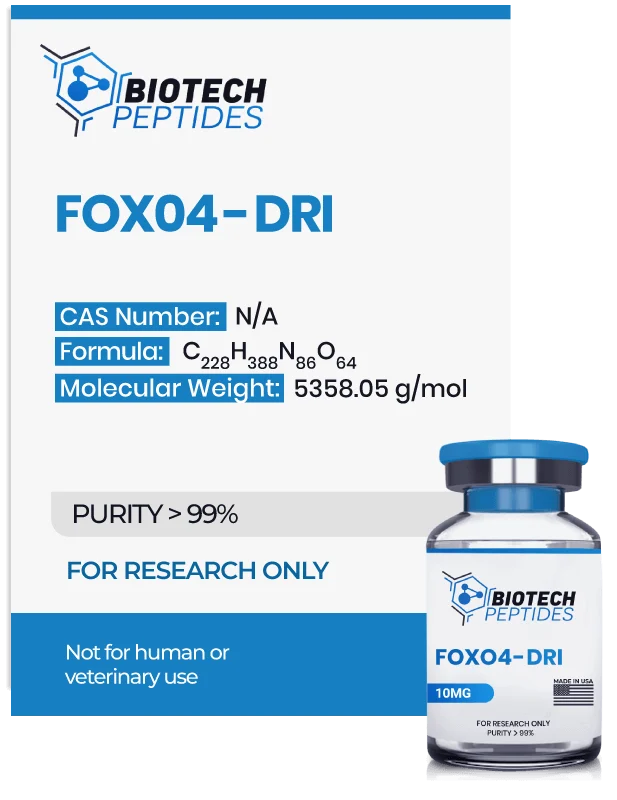
FOXO4-DRI (Proxofim) (10mg) is an experimental research peptide designed for laboratory investigations involving cellular senescence, FOXO4-related signaling, apoptosis, protein-protein interactions, and senolytic research. Supplied as a defined 10mg research quantity, FOXO4-DRI is intended for qualified scientific research and controlled laboratory experimentation.
FOXO4-DRI has attracted substantial scientific interest because of research examining the interaction between the FOXO4 protein and the tumor suppressor protein p53. Experimental studies have investigated whether disrupting this interaction can influence the survival of senescent cells. This makes FOXO4-DRI a notable research tool for laboratories studying cellular aging, senescence-associated mechanisms, and experimental senolytic strategies.
For researchers searching for FOXO4-DRI (Proxofim) (10mg), this product format provides a defined quantity for experimental planning, laboratory inventory, and controlled research applications.
Important: The 10mg quantity represents the amount of research material supplied. It is not a recommended human dose or treatment regimen.
FOXO4-DRI (Proxofim) Product Overview
FOXO4-DRI, also referred to as Proxofim, is an experimental peptide associated with research into the FOXO4-p53 interaction and cellular senescence.
Senescent cells are cells that have entered a state of essentially permanent cell-cycle arrest while remaining metabolically active. Understanding how these cells survive and communicate with surrounding tissues is an important area of modern cellular biology.
FOXO4-DRI has been investigated as an experimental approach for studying mechanisms that may influence senescent-cell survival. Research involving this peptide is therefore relevant to molecular biology, cellular aging, senescence research, apoptosis-related signaling, and experimental senolytic investigations.
The FOXO4-DRI (Proxofim) (10mg) format is intended for qualified laboratories requiring a specified quantity of research material.
Ingredients
The primary research ingredient is:
- FOXO4-DRI (Proxofim) – 10mg
FOXO4-DRI is a synthetic peptide designed around a FOXO4-related sequence used in experimental studies of protein interactions.
The exact formulation may vary according to the supplier and product presentation. Any buffers, stabilizers, salts, excipients, or other formulation components should be verified using the manufacturer’s product specification and batch-specific Certificate of Analysis (COA).
Do not assume additional ingredients without consulting the documentation associated with the specific product.
FOXO4-DRI Research Applications
Cellular Senescence Research
FOXO4-DRI is particularly associated with experimental research into cellular senescence. Researchers can use appropriate cellular models to investigate mechanisms associated with senescent-cell survival and signaling.
Senolytic Research
The FOXO4-DRI peptide has been investigated as a potential experimental senolytic strategy. Laboratory research can examine how disrupting specific protein interactions affects senescent cells.
The term “senolytic” in this context describes a research concept, not an established therapeutic indication for FOXO4-DRI.
FOXO4-p53 Interaction Research
One important area of interest is the interaction between FOXO4 and p53. Experimental research has investigated whether FOXO4-related mechanisms contribute to the persistence of senescent cells.
FOXO4-DRI can therefore be useful as a research tool for investigating protein-protein interactions and their relationship to cellular survival pathways.
Apoptosis Research
Laboratories may investigate FOXO4-DRI within experimental systems designed to study apoptosis-related mechanisms and cellular survival signaling.
Aging and Cellular Biology
FOXO4-DRI is also relevant to experimental studies examining biological aging, cellular senescence, and age-associated molecular mechanisms. These applications remain areas of scientific investigation and should not be presented as evidence of an approved anti-aging treatment.
Why Choose FOXO4-DRI (Proxofim) (10mg)?
Researchers searching for FOXO4-DRI 10mg, FOXO4-DRI research peptide, or Proxofim research material may require a clearly defined quantity for controlled laboratory experimentation.
When sourcing FOXO4-DRI, laboratories should consider:
- Confirmed compound identity,
- Stated 10mg quantity,
- Purity specifications,
- Batch or lot information,
- Certificate of Analysis,
- Analytical testing,
- Storage requirements,
- Product documentation,
- Research-use labeling.
Clear documentation can help laboratories maintain consistent experimental records and associate research results with the specific batch of material used.
FOXO4-DRI (Proxofim) Research Concentration Guide
There is no universal human dosage guide that should be applied to FOXO4-DRI. The 10mg product quantity should not be interpreted as a human dose, and experimental quantities should not be converted into instructions for self-administration.
For legitimate laboratory research, the appropriate concentration should be established using the validated protocol applicable to the specific experimental model.
A general research calculation is:
Required peptide amount = Target experimental concentration × Final experimental volume
Researchers can use the target concentration specified by their validated protocol together with the final experimental volume to determine the quantity of FOXO4-DRI required for an experiment.
Laboratory planning may include:
- Define the experimental objective.
- Select the appropriate experimental model.
- Establish the target concentration using a validated protocol.
- Determine the required experimental volume.
- Calculate the amount of research material required.
- Establish appropriate experimental controls.
- Record the product batch or lot number.
- Follow documented storage requirements.
- Record experimental conditions and observations.
- Maintain relevant analytical documentation.
This framework is intentionally non-prescriptive and is not a human dosing, injection, reconstitution, or self-administration protocol.
Buying FOXO4-DRI (Proxofim) (10mg) for Research
When purchasing FOXO4-DRI (Proxofim) (10mg), researchers should evaluate the product’s documentation and analytical specifications in addition to the stated quantity.
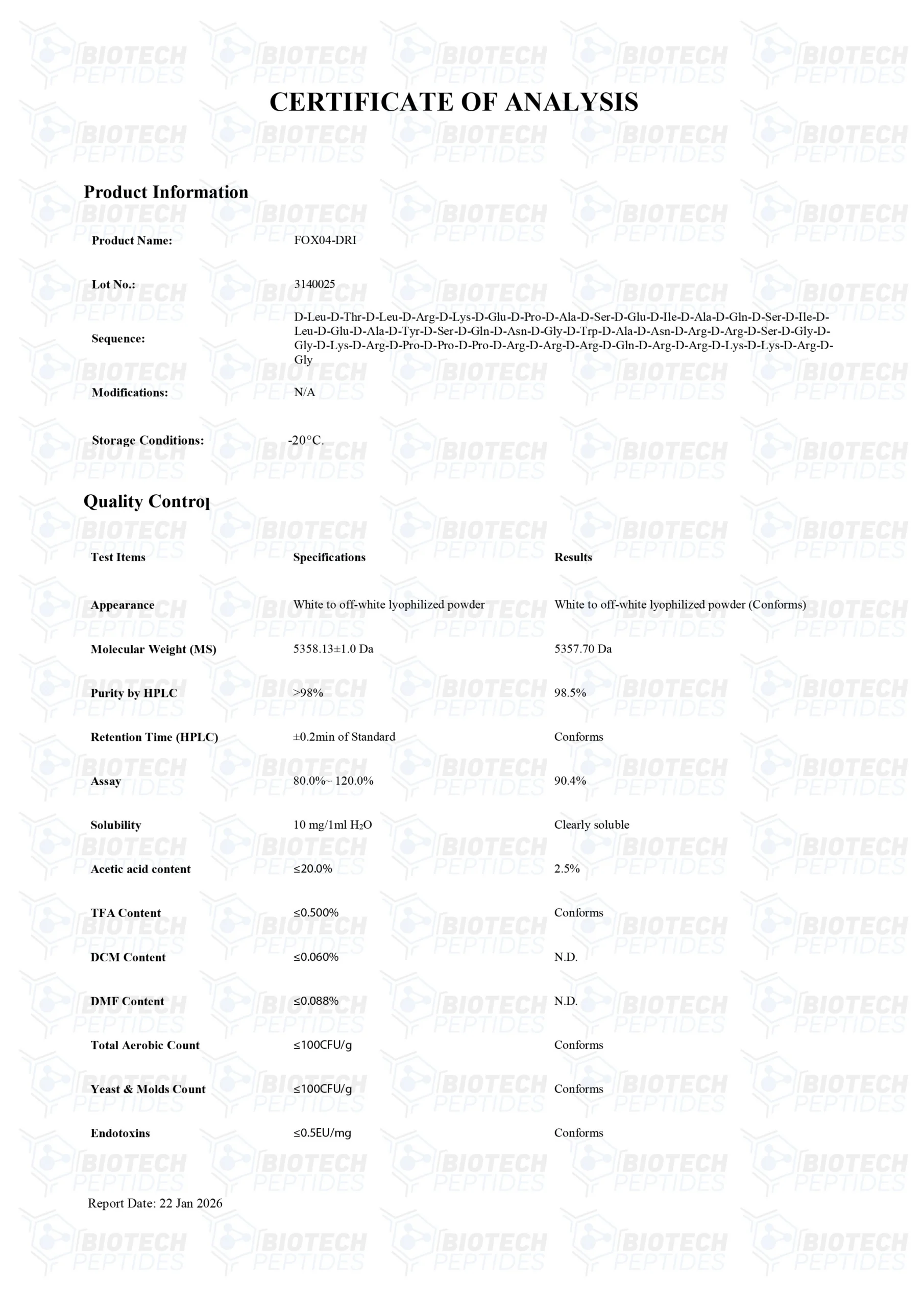
Before ordering, verify the product name, quantity, purity information, batch identification, available COA, storage requirements, and research-use designation.
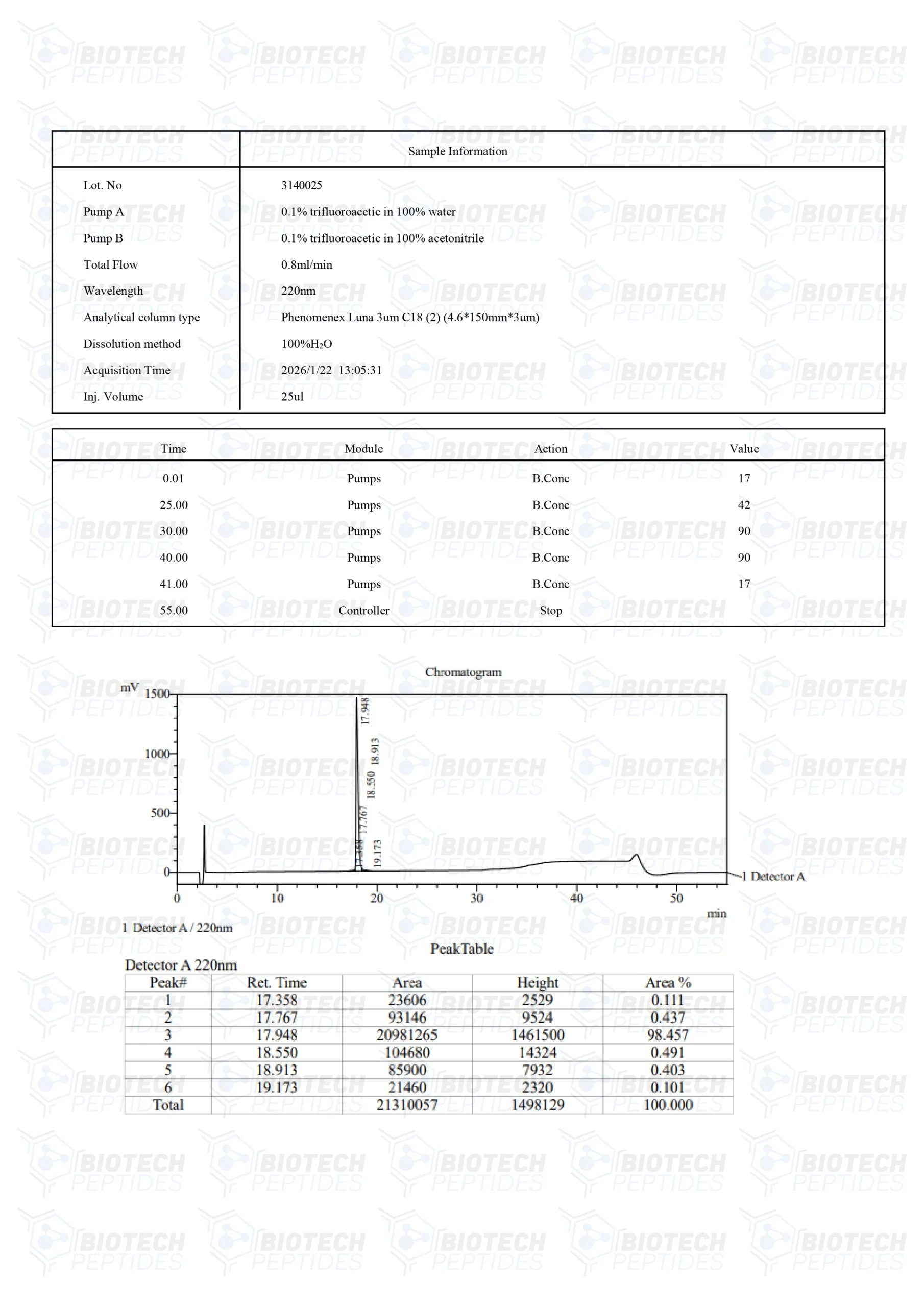
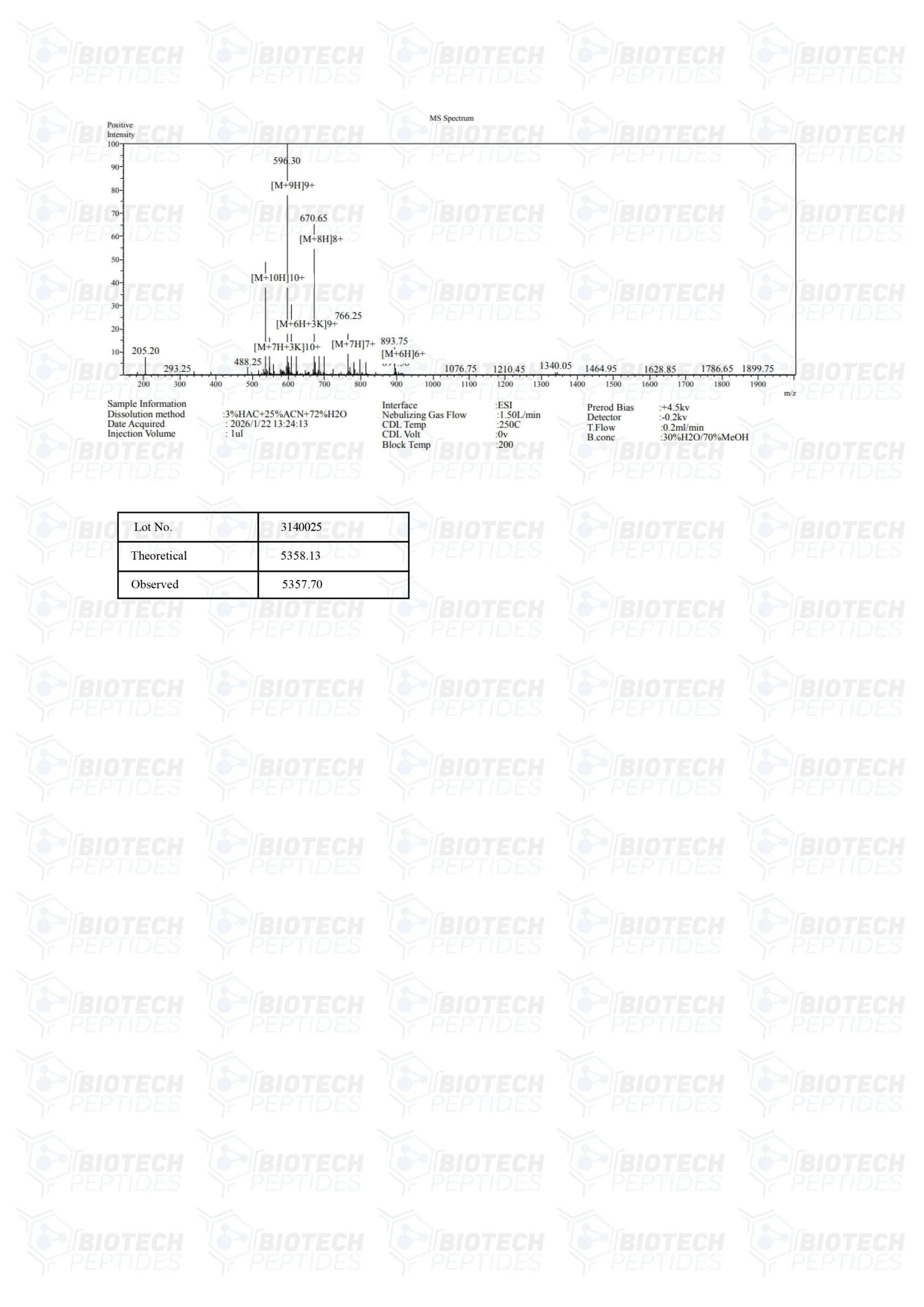
A Certificate of Analysis (COA) can provide useful batch-specific information and should be reviewed when available. Maintaining this documentation can support laboratory recordkeeping and experimental reproducibility.
For specialized experimental peptides, researchers should select products based on documented identity and quality specifications rather than relying solely on marketing claims.
FOXO4-DRI (10mg) Quality Considerations
Quality control is particularly important when working with experimental peptides. Laboratories should verify product identity and available analytical information before incorporating FOXO4-DRI into an experimental workflow.
Researchers should follow the manufacturer’s documented storage and handling requirements and recognize that formulation and stability can vary between suppliers.
Batch and lot information should be retained with laboratory records so that experimental observations can be accurately associated with the research material used.
Frequently Asked Questions
What is FOXO4-DRI (Proxofim) (10mg)?
FOXO4-DRI (Proxofim) (10mg) is a defined quantity of an experimental peptide used in laboratory research involving FOXO4 signaling, cellular senescence, protein interactions, apoptosis-related pathways, and senolytic research.
What does FOXO4-DRI stand for?
FOXO4-DRI refers to a research peptide designed to investigate mechanisms involving the FOXO4 protein and related cellular signaling.
What is Proxofim?
Proxofim is another name used for FOXO4-DRI in the research literature and commercial research context.
What is FOXO4-DRI used for?
FOXO4-DRI is investigated primarily in experimental research involving cellular senescence, FOXO4-p53 interactions, apoptosis-related mechanisms, and senolytic biology.
How much material does the product contain?
The product is specified as containing 10mg of FOXO4-DRI, subject to the supplier’s product specifications and batch documentation.
Is FOXO4-DRI an approved anti-aging treatment?
No. FOXO4-DRI is an experimental research compound and should not be marketed as an approved anti-aging treatment or as a proven therapy for age-related conditions.
Does 10mg represent one dose?
No. 10mg is the stated quantity of research material and is not a recommended human dosage.
Order FOXO4-DRI (Proxofim) (10mg) for Research
FOXO4-DRI (Proxofim) (10mg) provides qualified laboratories with a defined quantity of experimental peptide research material for investigations involving cellular senescence, FOXO4-related signaling, protein-protein interactions, apoptosis research, and experimental senolytic biology.
Researchers searching for FOXO4-DRI (Proxofim) (10mg), FOXO4-DRI 10mg, Proxofim research peptide, FOXO4-DRI research material, FOXO4-DRI laboratory peptide, FOXO4-DRI research compound, or FOXO4-DRI supplier should prioritize clearly identified products supported by appropriate analytical documentation, batch information, and transparent specifications.
Reviews
There are no reviews yet.