
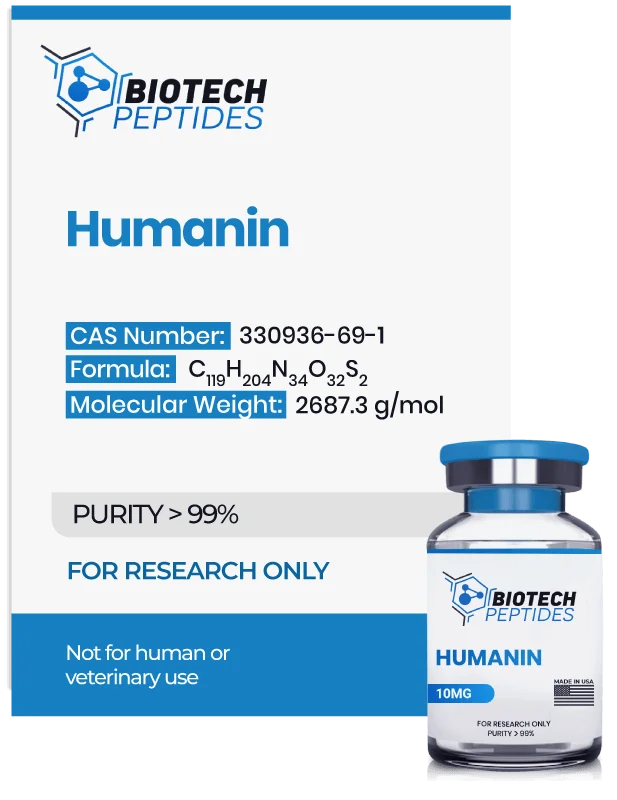
Humanin (10mg)
Humanin (10mg) is an experimental mitochondrial-derived research peptide supplied as a defined 10mg quantity for qualified laboratory and scientific investigations. Humanin has attracted significant research interest because of its association with mitochondrial biology, cellular stress signaling, apoptosis-related pathways, metabolism, and age-related biological processes.
Researchers investigating Humanin (10mg) may use the peptide in controlled experimental systems designed to study mitochondrial signaling, cellular survival mechanisms, metabolic pathways, oxidative-stress responses, and peptide-mediated cellular activity.
For laboratories searching for Humanin 10mg, Humanin research peptide, or Humanin research material, this defined research quantity provides a convenient format for experimental planning and laboratory inventory management.
Humanin (10mg) Product Overview
Humanin is a small mitochondrial-derived peptide that has become an important subject in experimental biology. Unlike conventional pharmaceutical compounds, Humanin is investigated primarily as a research tool for understanding biological signaling associated with mitochondria and cellular stress.
Research into Humanin has explored its relationship with pathways involved in cellular protection, mitochondrial function, metabolic regulation, and apoptosis-related signaling. These areas make Humanin relevant to researchers working in molecular biology, mitochondrial research, cellular physiology, and experimental aging research.
The Humanin (10mg) format is intended for qualified laboratories requiring a specified quantity of Humanin research material for controlled experimental applications.
Ingredients
The primary active research ingredient is:
- Humanin peptide – 10mg
Humanin is a mitochondrial-derived peptide. The exact formulation may vary depending on the supplier and product presentation.
Any additional excipients, buffers, stabilizers, counterions, or formulation ingredients should be confirmed through the manufacturer’s product specification and batch-specific Certificate of Analysis (COA).
Researchers should not assume that different Humanin products have identical formulations.
Humanin Research Applications
Mitochondrial Biology Research
Humanin is particularly relevant to investigations involving mitochondrial signaling. Researchers can use appropriate experimental systems to examine relationships between Humanin and mitochondrial cellular processes.
Cellular Stress Research
Experimental studies may investigate Humanin in relation to cellular responses to stress. Such research can help characterize peptide-mediated signaling and cellular response mechanisms.
Apoptosis Research
Humanin has been investigated in connection with molecular pathways associated with apoptosis and cell-survival signaling. Laboratory models can be used to investigate these mechanisms under controlled conditions.
Metabolic Research
Humanin is also of interest in experimental metabolic biology. Researchers can examine peptide-related cellular responses in appropriate models involving metabolic signaling and mitochondrial function.
Aging and Longevity Research
Mitochondrial-derived peptides are an active area of experimental aging research. Humanin may be incorporated into laboratory investigations examining biological mechanisms associated with cellular aging, mitochondrial signaling, and age-related molecular pathways.
These research areas should not be interpreted as evidence that Humanin is an approved anti-aging treatment or therapeutic product.
Why Choose Humanin (10mg)?
For laboratories looking for Humanin (10mg), a defined research quantity can simplify experimental planning and material management.
When selecting Humanin research material, researchers should consider:
- Confirmed product identity,
- Stated 10mg quantity,
- Purity information,
- Batch or lot number,
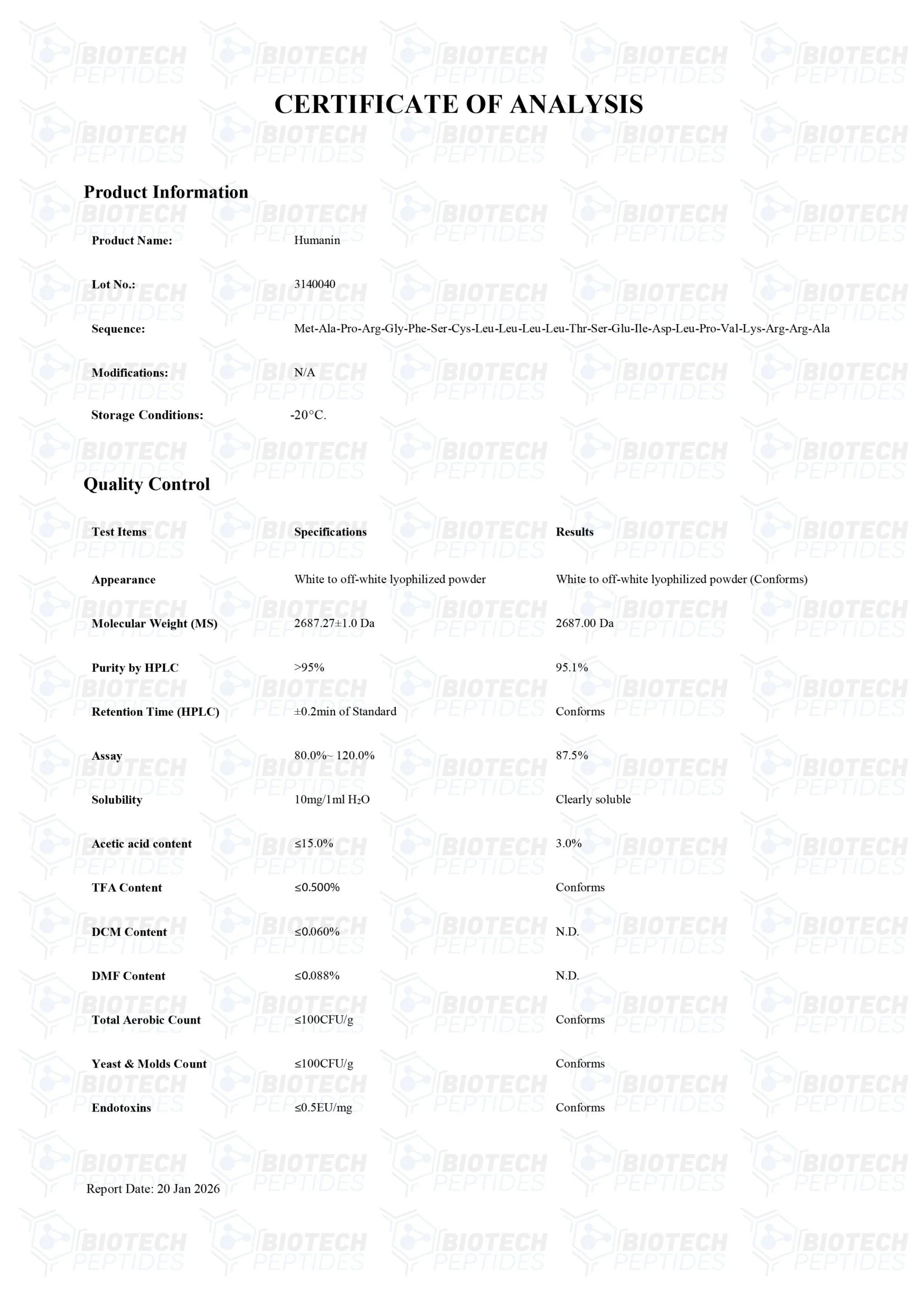
- Certificate of Analysis,
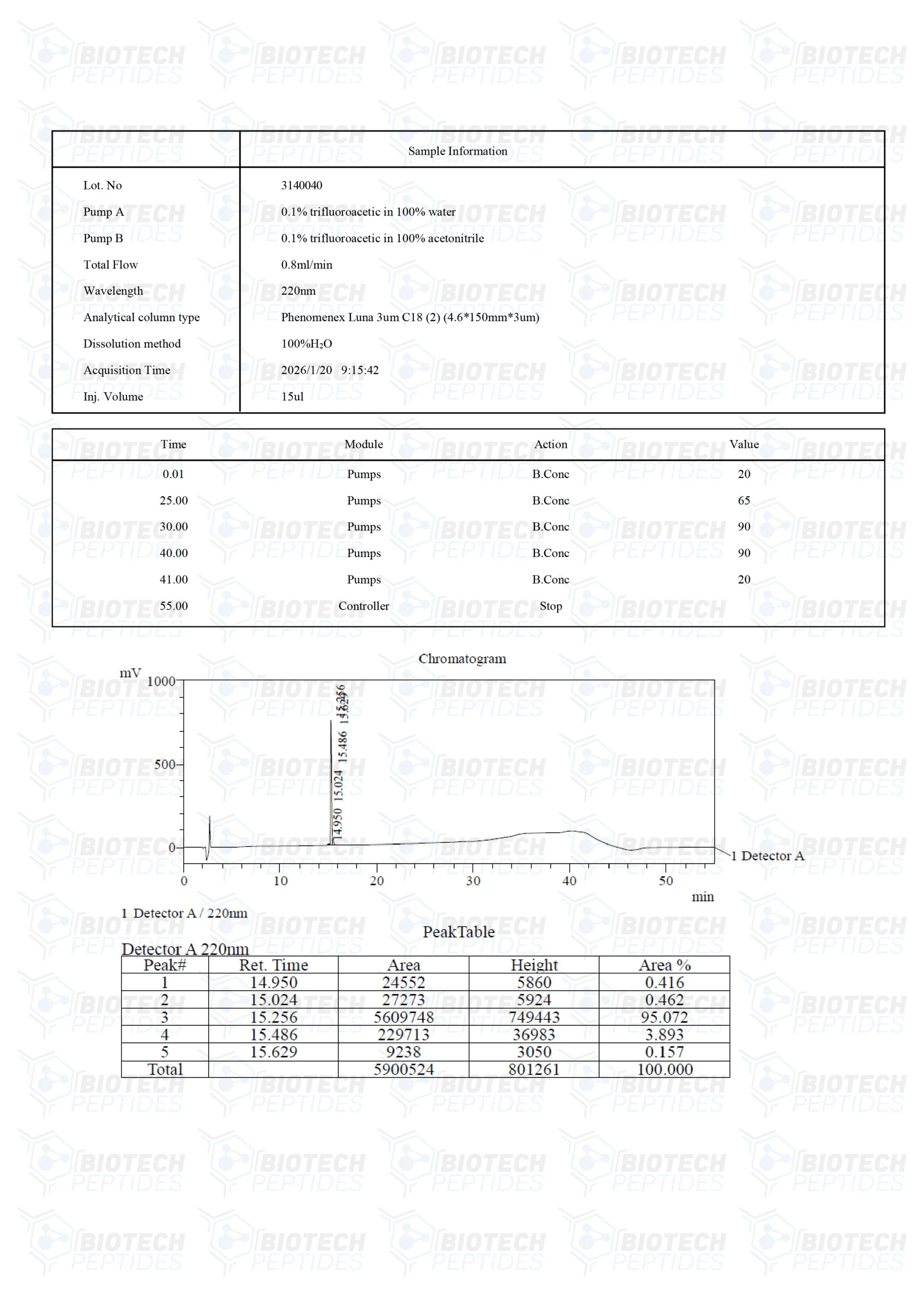
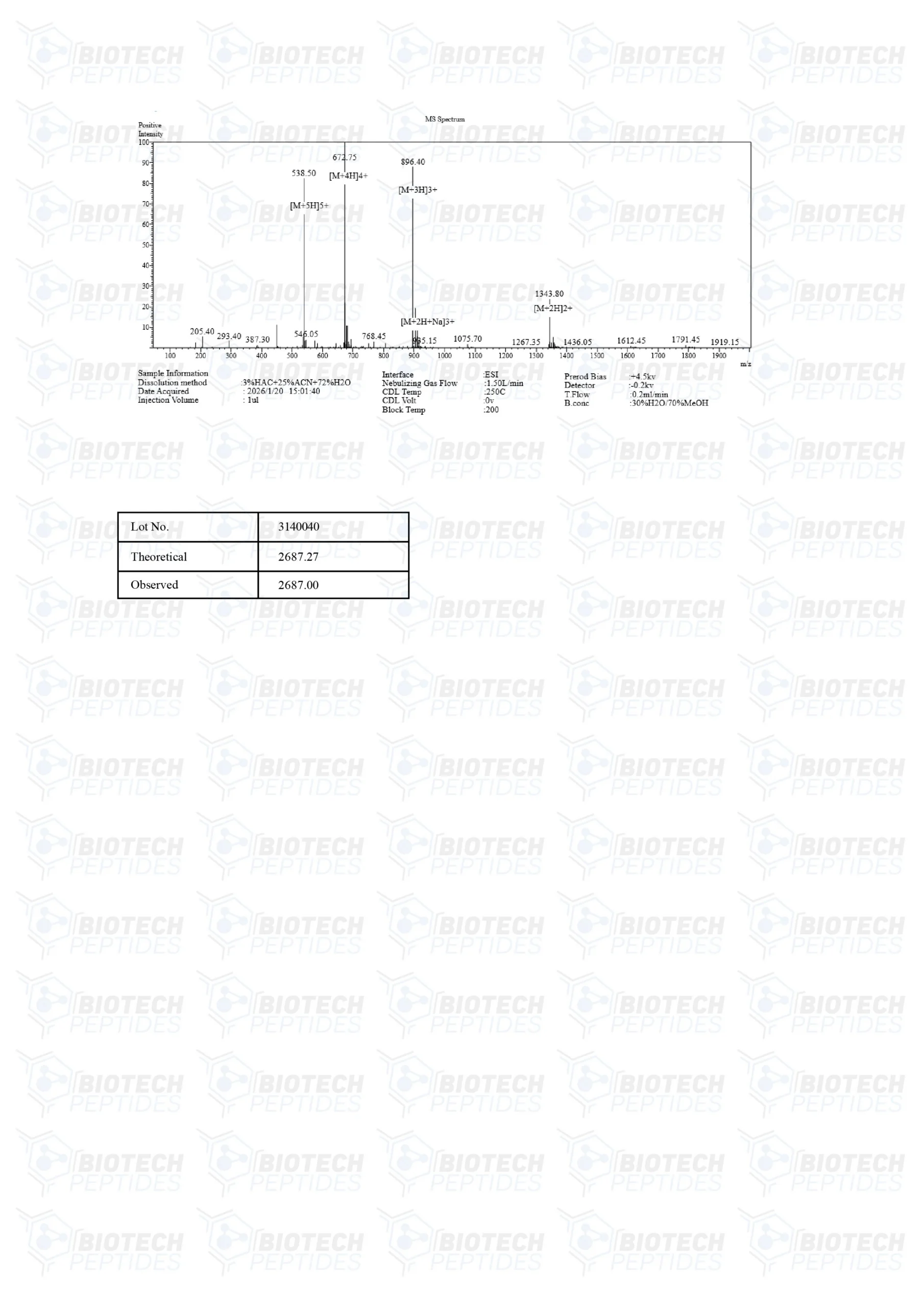
- Analytical testing,
- Storage requirements,
- Manufacturer specifications,
- Research-use labeling.
Clear documentation is particularly valuable when maintaining reproducible laboratory records or comparing experimental results across different batches.
Humanin (10mg) Research Concentration Guide
There is no universal human dosage guide that should be applied to this research product. The 10mg package size is a product quantity and should not be interpreted as a dose or treatment recommendation.
For legitimate laboratory research, the appropriate concentration should be established from the validated protocol for the specific experimental model.
A general research calculation is:
Required peptide amount = Target experimental concentration × Final experimental volume
Researchers can use the target concentration established by their validated laboratory protocol and the intended experimental volume to determine the required quantity of Humanin.
Experimental planning may include:
- Define the research objective and experimental model.
- Establish the target concentration from a validated protocol.
- Determine the final experimental volume.
- Calculate the required research-material quantity.
- Establish appropriate controls.
- Record the Humanin batch or lot number.
- Follow documented storage requirements.
- Record experimental conditions and observations.
- Maintain applicable analytical documentation.
This is a general laboratory calculation framework and is not a human dosing, injection, reconstitution, or self-administration protocol.
Buying Humanin (10mg) for Research
When purchasing Humanin (10mg), researchers should evaluate the material based on documented quality and suitability for the intended scientific application.
Before ordering, verify the product identity, stated quantity, available purity information, batch details, analytical documentation, and storage requirements.
A Certificate of Analysis (COA) can provide important batch-specific information and should be reviewed when available. Laboratories should retain relevant product documentation as part of their research records.
For specialized research peptides, transparent specifications can make it easier to compare products and select material appropriate for the intended experimental workflow.
Humanin (10mg) Quality Considerations
Research peptide quality and documentation can be important factors in experimental reproducibility. Laboratories should use appropriate analytical and experimental controls when evaluating Humanin.
Researchers should follow the supplier’s documented storage and handling requirements and avoid assuming stability or formulation characteristics across different manufacturers.
Batch information should be retained whenever Humanin is used in an experiment so that research results can be associated with the specific material tested.
Frequently Asked Questions
What is Humanin (10mg)?
Humanin (10mg) is a defined research quantity of Humanin, a mitochondrial-derived peptide investigated in experimental studies involving mitochondrial biology, cellular signaling, apoptosis-related pathways, metabolism, and cellular stress.
What does Humanin do?
Humanin is studied for its biological interactions and signaling mechanisms in experimental models. Research findings should not be interpreted as established therapeutic effects in humans.
How much Humanin is included?
The product is specified as containing 10mg of Humanin research material, subject to the manufacturer’s product specifications and batch documentation.
Is Humanin a peptide?
Yes. Humanin is a small mitochondrial-derived peptide that has been studied extensively in experimental biological research.
Is Humanin approved as a medication?
A research-labeled Humanin product should not be represented as an approved medication or as a substitute for medical treatment.
Does 10mg represent one dose?
No. 10mg represents the product quantity and is not a recommended human dosage.
Order Humanin (10mg) for Research
Humanin (10mg) provides qualified researchers with a defined quantity of an experimental mitochondrial-derived peptide for controlled scientific investigation.
Its relevance to mitochondrial biology, cellular stress research, apoptosis-related signaling, metabolic research, cellular physiology, and experimental aging research makes Humanin a specialized research material for appropriately equipped laboratories.
Researchers searching for Humanin (10mg), Humanin 10mg research peptide, Humanin research material, Humanin peptide research, Humanin laboratory peptide, Humanin research compound, or Humanin supplier should prioritize products with clear identification, appropriate analytical documentation, batch information, and transparent specifications.
Reviews
There are no reviews yet.