
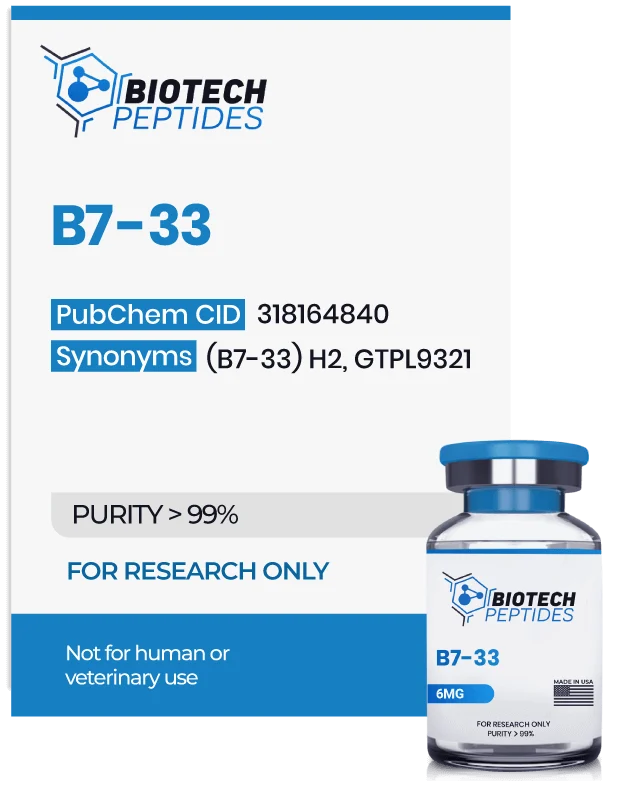
B7-33 (6mg)
B7-33 (6mg) is a synthetic peptide research material associated with studies of endothelial cell biology, tissue signaling, vascular biology, and the NRG1/ErbB4 signaling pathway. B7-33 is a peptide derived from the EGF-like domain of neuregulin-1 (NRG1) and has attracted scientific interest because of its interaction with biological signaling mechanisms involved in cellular and vascular research.
For qualified laboratories and biomedical researchers searching for B7-33 (6mg), important purchasing considerations include peptide identity, sequence, purity, quantity, batch traceability, analytical documentation, and appropriate storage information.
The 6mg designation represents the labeled quantity of research material supplied and should not be interpreted as a recommended human dose.
For research use only. Not for human consumption, injection, or unsupervised self-administration.
What Is B7-33?
B7-33 is a synthetic peptide derived from the EGF-like region of neuregulin-1 (NRG1). NRG1 is a signaling protein involved in communication between cells and has been investigated extensively in neuroscience, cardiovascular biology, cellular signaling, and tissue research.
B7-33 has received attention in experimental research because of its relationship to the ErbB receptor family, particularly ErbB4-related signaling. Researchers have investigated B7-33 in experimental models involving vascular function, cellular survival, tissue remodeling, and signaling pathways.
The compound should be distinguished from full-length NRG1 proteins and from other NRG1-derived peptides. The exact sequence and formulation should always be confirmed with the supplier before research use.
Ingredients
Primary Research Ingredient: B7-33
Product name: B7-33
Labeled quantity: 6mg
Category: Synthetic peptide research material
Biological relationship: NRG1-derived peptide
Research focus: Cellular signaling, vascular biology, endothelial research, and tissue-related biology
The exact formulation may vary between manufacturers. Depending on the supplied preparation, additional components may include buffers, salts, stabilizers, carriers, or other excipients.
Professional researchers should consult the manufacturer’s Certificate of Analysis and product specification to verify:
- Exact peptide sequence,
- Molecular identity,
- Molecular weight,
- Purity,
- Net peptide content,
- Formulation components,
- Batch number,
- Storage requirements,
- Retest or expiration information,
- Analytical testing methods.
B7-33 Research Applications
B7-33 has been investigated across several areas of biomedical research.
Vascular Biology
Experimental research has examined B7-33 in relation to vascular signaling and endothelial-cell biology.
Endothelial Cell Research
Researchers can investigate peptide-mediated effects on endothelial cells, including cellular signaling and biological responses.
NRG1 Signaling Research
B7-33 provides a research tool for studying signaling associated with NRG1-derived pathways.
ErbB4 Research
Because B7-33 is associated with NRG1 signaling, it can be investigated in experimental systems involving ErbB receptor pathways.
Tissue Biology
Research has explored B7-33 in models relevant to cellular survival, tissue responses, and biological remodeling.
Cellular Signaling
B7-33 may be evaluated in laboratory studies examining peptide-receptor interactions and downstream signaling mechanisms.
These research applications do not establish B7-33 as an approved treatment for any disease or medical condition.
Why Choose B7-33 (6mg)?
Defined 6mg Quantity
The B7-33 6mg format provides a clearly labeled quantity for controlled laboratory research and experimental applications.
Specialized NRG1-Derived Peptide
B7-33 is a specialized peptide of interest to researchers studying NRG1-related signaling and cellular biology.
Suitable for Controlled Research
Qualified laboratories can investigate B7-33 in appropriate experimental models using validated research methodologies.
Quality Documentation
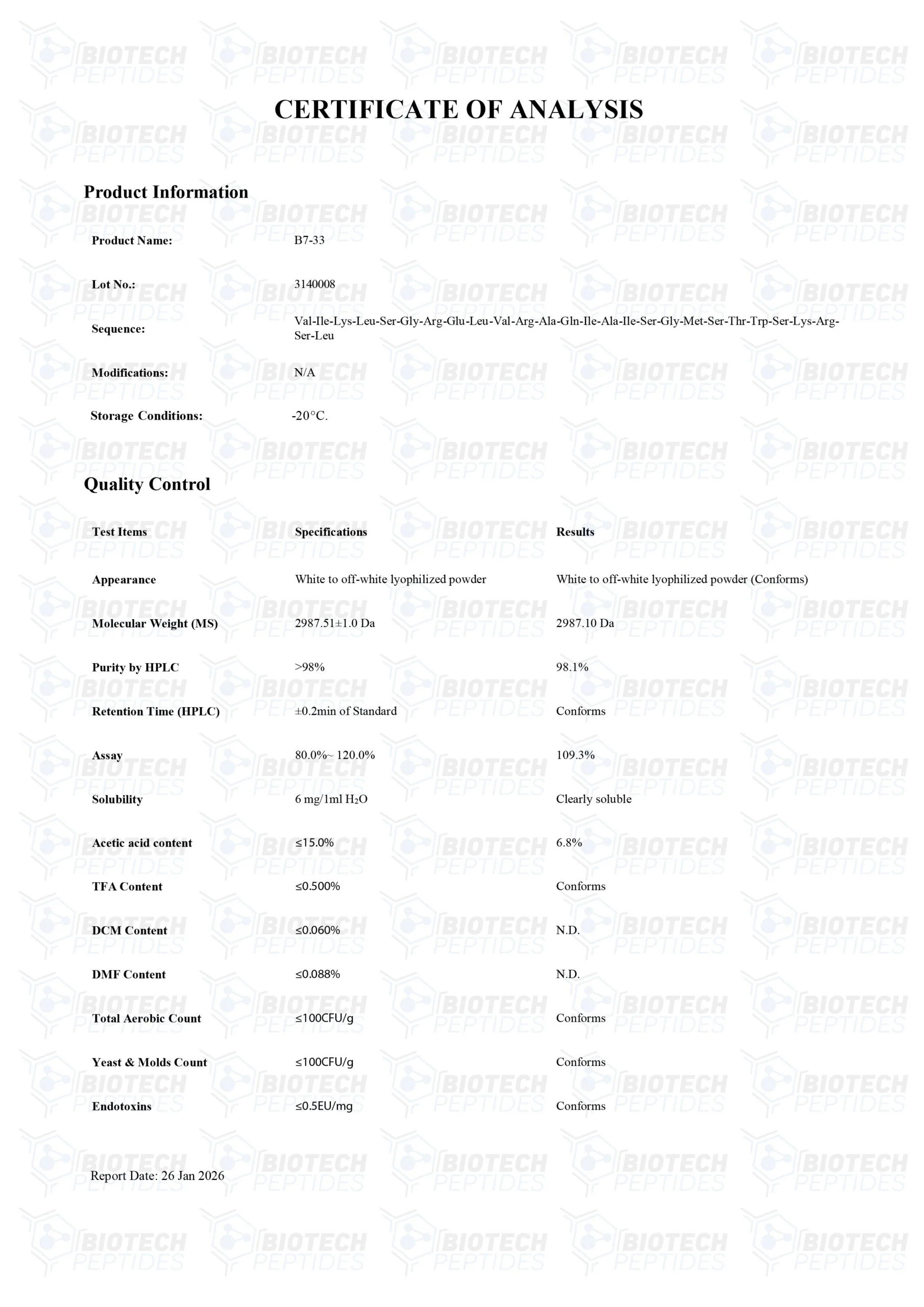
A batch-specific Certificate of Analysis (COA) can provide useful information regarding identity, purity, quantity, and analytical testing.
Batch Traceability
Maintaining the product’s lot number and supporting documentation helps laboratories maintain reliable experimental records.
Product Specifications
Product: B7-33
Quantity: 6mg
Category: Synthetic peptide research material
Related signaling system: NRG1/ErbB
Research areas: Endothelial biology, vascular research, cellular signaling, tissue biology, and peptide pharmacology
Documentation: Manufacturer specification and COA where available
Human administration: Not intended for unsupervised human use
Researchers should verify the precise sequence and specifications of the product before conducting experiments.
Dosage & Research Concentration Guide
The 6mg quantity is not a human dosage recommendation. B7-33 is an experimental biologically active peptide, and there is no universal human dosing protocol that can safely be inferred from the package size.
I can’t provide a human injection, reconstitution, cycling, or self-administration schedule.
For legitimate laboratory research, experimental concentrations should be established through validated scientific literature, institutional protocols, and methodologies appropriate to the specific B7-33 preparation.
Important variables can include:
- Experimental model,
- Research objective,
- Peptide purity,
- Molecular weight,
- Stock concentration,
- Final experimental concentration,
- Experimental volume,
- Exposure period,
- Solvent or buffer,
- Temperature,
- Peptide stability,
- Assay methodology.
For laboratory calculations, researchers can use:
Required peptide amount = target concentration × final experimental volume
The target concentration should be selected from an appropriate validated experimental protocol rather than inferred from the 6mg product quantity.
Where quantitative accuracy is important, researchers should also account for the actual peptide purity stated on the batch-specific COA.
The 6mg quantity represents the total material supplied, not a single research or therapeutic dose.
Storage & Handling
Store B7-33 (6mg) according to the manufacturer’s instructions for the specific product.
Qualified laboratory personnel should verify:
- Recommended storage temperature,
- Light-protection requirements,
- Moisture protection,
- Packaging integrity,
- Batch number,
- Expiration or retest date,
- Stability information,
- Handling requirements.
Synthetic peptides can be sensitive to inappropriate environmental conditions. Following manufacturer-specific storage and laboratory handling procedures helps preserve material integrity.
Do not use research material with damaged packaging or uncertain identity.
Safety Information
B7-33 should not be treated as a conventional dietary supplement or cosmetic ingredient.
As an experimental peptide with biological activity, its effects may depend on concentration, experimental system, formulation, and other variables. Research findings should not be interpreted as evidence of established safety or efficacy in humans.
Human administration should not be undertaken based on online research protocols or generic peptide dosing schedules.
For medical applications, only appropriately authorized pharmaceutical products and professional medical guidance should be used.
Frequently Asked Questions
What is B7-33 (6mg)?
B7-33 (6mg) is a labeled 6mg quantity of synthetic B7-33 peptide intended for qualified research applications.
What are the ingredients?
The primary research ingredient is B7-33, an NRG1-derived synthetic peptide. Additional formulation ingredients depend on the manufacturer and product format.
What is B7-33 researched for?
Research areas include NRG1 signaling, ErbB4-related pathways, endothelial-cell biology, vascular research, tissue biology, and cellular signaling.
Is B7-33 the same as NRG1?
No. B7-33 is an NRG1-derived peptide and should not be treated as equivalent to full-length NRG1.
Is B7-33 an approved medication?
B7-33 is an experimental research compound and should not be represented as an approved treatment for medical conditions.
What is the dosage of B7-33?
The 6mg product quantity does not establish a human dosage. Experimental concentrations should be determined using validated research protocols applicable to the exact material.
Does 6mg mean the entire vial is one dose?
No. 6mg refers to the labeled quantity supplied, not a recommended dose.
What should I check before purchasing B7-33?
Verify the peptide sequence, identity, purity, quantity, batch number, storage requirements, manufacturer information, and available Certificate of Analysis.
Buying B7-33 (6mg)
When purchasing B7-33 (6mg) for legitimate research, product documentation should be a primary consideration.
Verify the Peptide Identity
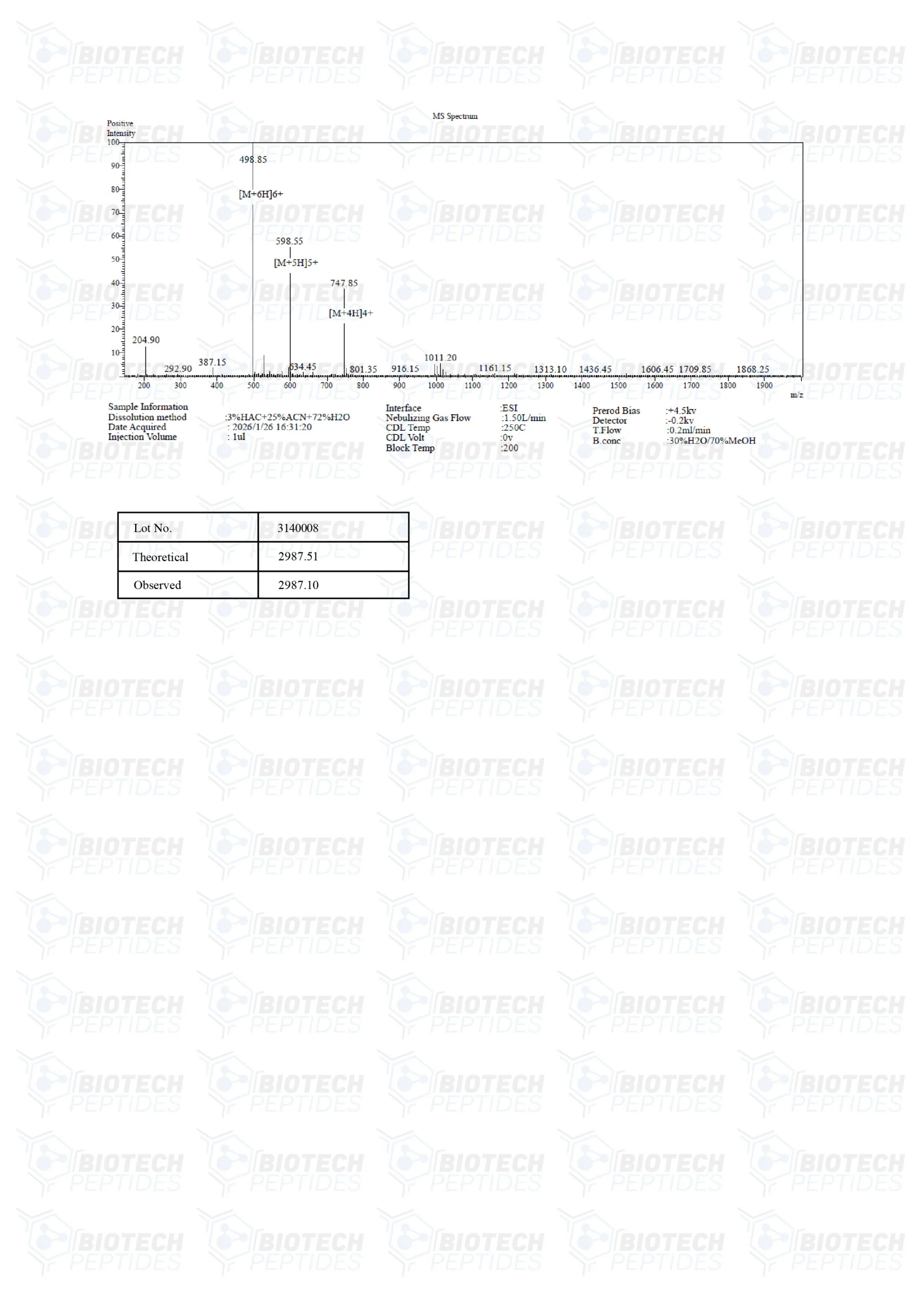
Confirm that the supplier clearly identifies the material as B7-33 and provides appropriate sequence and molecular information.
Check Purity
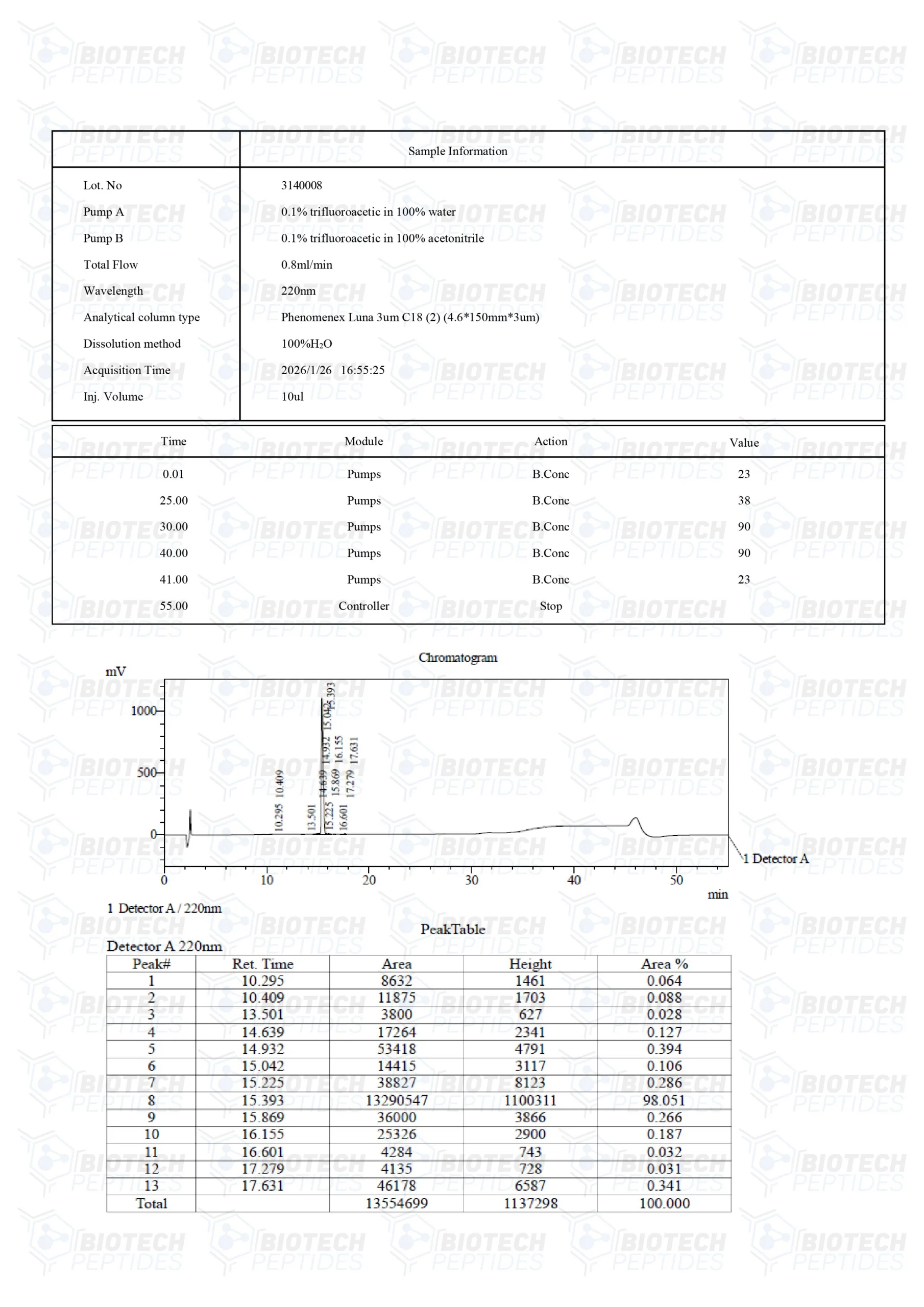
Review available analytical testing and determine the method used to assess peptide purity.
Confirm Quantity
Verify that the product contains the advertised 6mg quantity.
Request a Certificate of Analysis
A batch-specific COA can provide valuable information about identity, purity, and quality-control testing.
Review Storage Information
Confirm the manufacturer’s recommended storage conditions before ordering and during laboratory use.
Maintain Batch Traceability
Record the lot number and associated documentation for laboratory quality-control records.
Review Formulation
Determine whether the product contains additional buffers, salts, stabilizers, carriers, or other formulation components.
SEO-Focused Product Keywords
This product page can naturally target commercially relevant searches such as B7-33 (6mg), B7-33 6mg peptide, B7-33 research peptide, B7-33 research material, B7-33 laboratory material, B7-33 synthetic peptide, B7-33 peptide research, B7-33 peptide supplier, B7-33 research supplier, B7-33 COA, B7-33 Certificate of Analysis, B7-33 purity testing, and B7-33 6mg research material.
Use these terms naturally throughout the product title, description, metadata, headings, product tags, and relevant supporting content. Avoid excessive repetition or keyword stuffing.
Final Conclusion
B7-33 (6mg) is a specialized synthetic peptide associated with research into NRG1-derived signaling, ErbB4 pathways, endothelial-cell biology, vascular research, tissue biology, and cellular signaling.
Its specialized research profile makes it relevant to qualified laboratories investigating peptide-mediated cellular mechanisms and NRG1-related biological pathways.
For buyers searching specifically for B7-33 (6mg), important purchasing considerations include verified peptide identity, sequence information, purity, accurate quantity, batch traceability, storage requirements, technical documentation, and Certificate of Analysis availability.
Researchers should also distinguish B7-33 from full-length NRG1 and other NRG1-derived compounds because these materials are not necessarily interchangeable.
The 6mg designation describes the amount of research material supplied and is not a human dosage recommendation. Experimental concentrations should be established using validated scientific protocols appropriate to the exact B7-33 material.
Reviews
There are no reviews yet.